Sidewalks in Tampa are https://allphaseconcretefl.com/ more than poured concrete. They shape how people move through neighborhoods, how customers approach storefronts, and how a city meets legal and moral obligations to accessibility. All Phase Concrete builds sidewalks that meet Americans with Disabilities Act standards while surviving Florida humidity, sun, and stormwater challenges. This piece explains what matters when you replace or install an ADA-compliant sidewalk, the trade-offs contractors face, and why choosing a seasoned local crew matters for long-term performance.
Why ADA compliance matters for property owners and municipalities Meeting ADA requirements is not an abstract legal box to check. For a business, a compliant path of travel prevents costly fines and lost customers who cannot access services. For property managers and HOAs, a pedestrian accident on uneven pavement can mean litigation, insurance increases, and years of repair headaches. For the city, accessible sidewalks mean fewer complaints and smoother inspections during public works audits.
All Phase Concrete has worked on both municipal projects and private storefronts in Tampa. On a recent downtown job, a retailer lost foot traffic because customers approaching from the rear faced a missing curb ramp. Replacing that single ramp cost less than the potential loss of a seasonal sale and removed a liability. Real examples like that are why accessibility is also good business sense.
Key ADA technical points that actually affect how sidewalks are built ADA standards may read like a manual, but in practice the items that change the job are simple: slope, cross slope, width, detectable warnings, and transitions. The running slope is the longitudinal grade people travel. The cross slope is the side-to-side tilt. Both must stay within tight ranges to be truly accessible for people using wheelchairs, walkers, or strollers.
In Tampa, where streets can have variable elevations and stormwater controls, a permissive approach to grading creates problems later. If a sidewalk exceeds a running slope of about 5 percent in a given segment, it is not ADA compliant unless it is treated as a ramp with handrails and other features. Cross slopes should be 2 percent or less to avoid wheel drift. Widths should comfortably allow two people to pass; 36 inches is the regulatory minimum at some points, but 48 inches or more is a practical standard for public walkways that will see regular two-way traffic.
Detectable warnings, the truncated domes at curb ramps, are small but often the last item to be specified. They help people with visual impairments know they are entering a vehicular space. On many projects All Phase Concrete sees, the contractor must coordinate with suppliers for the correct color, size, and anchoring method so those installations last through power washing, Florida sun, and cleaning chemicals.
Materials and mix design for Tampa’s climate Not all concrete is equal. The mix design influences durability, finish, and maintenance frequency. In coastal Tampa neighborhoods, salt exposure from winter road treatments is less of a concern than humidity, organic staining, and occasional standing water. A common mix that All Phase Concrete uses for sidewalks includes a moderate compressive strength target between 4,000 and 5,000 psi at 28 days, air entrainment to resist freeze-thaw cycles even though freezes are rare, and a controlled water-cement ratio to reduce shrinkage cracking.
Fiber reinforcement or welded wire fabric is selected based on expected loads. For a residential sidewalk, light traffic and foot traffic make fiber mesh attractive because it resists plastic shrinkage and hairline cracking without complicating placement. On commercial or city projects where occasional service vehicles might mount the curb, welded wire fabric with thicker slabs and a heavier mix makes more sense.
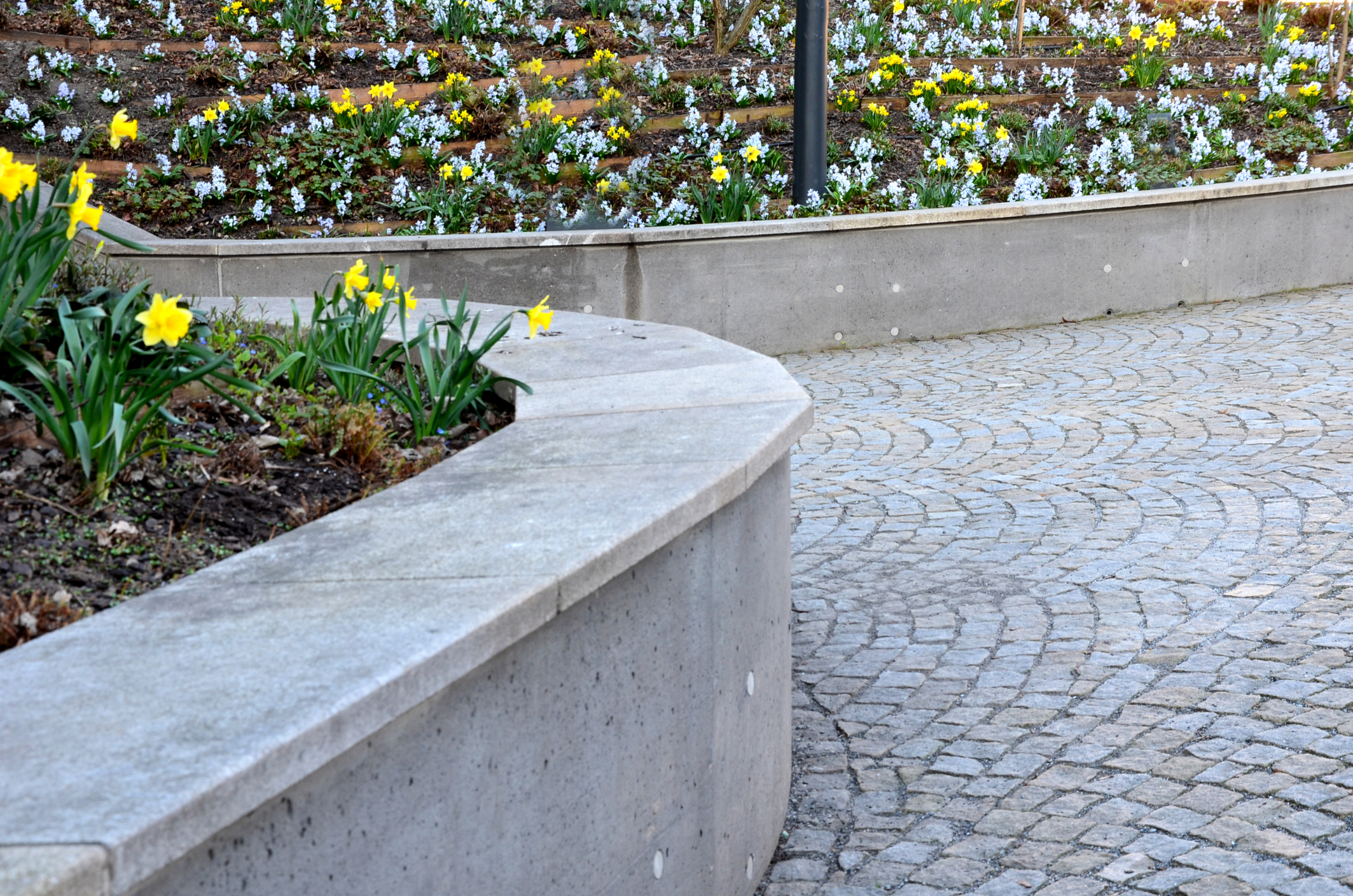
Finishing choices affect slip resistance, appearance, and long-term maintenance. Broom finish is typical for public sidewalks because it provides consistent traction and is economical. Exposed aggregate or stamped textures look upscale but require more maintenance and careful consideration of ADA slip coefficients. When a project requires decorative surfaces at entrances, All Phase Concrete will often separate the decorative strip from the accessible path, keeping the smooth, consistent finish in the travel lane.
Permitting, coordination, and the often-hidden portions of cost When homeowners or property managers ask why a sidewalk project costs what it does, a big chunk is not the labor to pour concrete but permitting, demolition, utility location, and subgrade preparation. In Tampa, a repair might require a permit, a survey to verify existing grades, and a public works inspection if the sidewalk abuts a city right-of-way. Utility flags must be respected; locating lines for irrigation, cable, and gas can add several days before saw cutting begins.
Subgrade work is the place where corners should not be cut. Poor compaction leads to settlement and cracking within a year or two. All Phase Concrete typically compacts to a specified Proctor density or uses stone base where drainage is a Concrete contractor concern. On projects near mature trees, root barriers or root pruning is discussed up front because tree roots will quickly heave a sidewalk if left unchecked. Removing a tree or rerouting a sidewalk are both choices with trade-offs: tree removal affects shade and property value, while rerouting changes access patterns.
A practical checklist for ADA projects
- Verify running slope and cross slope measurements across the entire path of travel. Confirm minimum width and plan for widened sections at doorways or high traffic areas. Specify detectable warnings, color, and anchoring method for each curb ramp. Decide on mix design and reinforcement based on expected loads and coastal exposure. Coordinate permits, utility locates, and final inspection timing with local authorities.
I include this short checklist because projects stall most often around missing coordination items. If you hand this to a contractor up front, you’ll eliminate several common delays.
Trade-offs: speed versus longevity, cost versus compliance An owner often faces a choice between quick, low-cost repair and long-term, code-compliant replacement. For a cracked slab that still drains and is mostly flat, a localized patch or overlay may be attractive. Those repairs can be fast and inexpensive but typically last a few years if subgrade issues continue. Surface grinding may remove trip hazards but does not fix a failing base.
Conversely, a full demolition and rebuild with corrected grades and proper drainage is more expensive up front, but it prevents repeated patches and potential ADA violations. For municipal projects, the higher initial cost usually wins because maintenance budgets bleed slowly and public safety is a priority. For private property, a middle ground often works: rebuild the most problematic sections correctly, and schedule lower-priority noncompliant sections for later phases.
Costs in Tampa vary by scope. For a single curb ramp and short sidewalk tie-in, expect a range that depends on permits and whether the city requires nightly lane closures. A full commercial sidewalk reconstruction along a retail storefront can run into the tens of thousands of dollars when factoring decorative finishes, detectable warnings, and engineered base. Always ask your contractor for a line-item estimate that separates demolition, base work, concrete, detectable warnings, and permit costs so you can compare bids fairly.
Timeline and scheduling considerations Concrete needs time to cure to perform. Shortcuts like opening the sidewalk to foot traffic too soon often cause surface scuffs and premature wear. For sidewalks, a typical timeline from demolition to reopening is 7 to 10 days for a standard residential job, longer if the city inspection schedule introduces delays. Commercial projects with traffic control or phased closures can take several weeks.
Weather matters in Tampa, but not the way it does in colder climates. Rain delays are common during afternoon showers, and heavy rain can wash cement fines from a fresh pour. Contractors plan pours for mornings during wet seasons and schedule drains or temporary coverings. High humidity slows the evaporation cure process, which affects finishing windows and the time before you can apply joint sealers or coatings.
Site access affects schedule and cost. Narrow downtown alleys require careful staging and may trigger flagging services for safety. If the job needs a truck-mounted concrete pump, that increases equipment cost but speeds placement in tight spaces.
Maintenance and realistic lifespan A properly built concrete sidewalk in Tampa will last 25 years or more with minimal maintenance. That assumes good base preparation and control joints installed at appropriate spacing, generally every 4 to 6 feet for 4-inch slabs and more for thicker sections. Sealants can help prevent staining and surface degradation where chemicals or heavy foot traffic are present, but sealers must be re-applied periodically and can alter slip resistance.
Common maintenance items are joint resealing, spot patching at high-wear areas, and clearing debris that traps moisture against the concrete. Plantings too close to sidewalks cause root heave; installing a 6- to 12-inch gravel strip alongside the pavement can reduce that issue. For commercial owners, a planned maintenance budget that treats sidewalks like other building systems will avoid reactive emergency repairs.
Why local expertise matters more than the lowest bid All Phase Concrete’s experience in Tampa shows that the cheapest bid often hides omissions: inadequate base prep, missing permits, or unpriced detectable warnings. Local crews understand the municipal standards for ramp placement and the inspection checkpoints a nonlocal crew might miss. That reduces the risk of costly rework after an inspector orders corrections.
An example: a property manager contracted a nonlocal crew to replace several sidewalk panels. The crew chose a broom finish and placed stamped concrete at the entrance without checking municipality standards. Inspectors later required removal of the decorative treatment in the accessible path and reinstallation of detectable warnings. The rework doubled the budget and delayed reopening by weeks. Local contractors like All Phase Concrete avoid that by coordinating with city inspectors before work begins.
Working with stakeholders: property owners, cities, and users A successful sidewalk project includes conversation with the people who will use the path. For a storefront, that means discussing where customers approach, deliveries, and the visibility of ramps. For a residential street, it means balancing tree preservation with safety. All Phase Concrete often arranges a site walk with the property owner, a city inspector when required, and a representative of nearby businesses or residents so that design choices reflect actual use.
Examples of stakeholder choices include whether to place a ramp at the corner closest to a main entrance or to maintain a tree that provides shelter but complicates grade work. There are no purely technical answers in these cases; judgment and communication decide the outcome. A contractor who explains the trade-offs and shows photo examples of similar jobs helps stakeholders make informed decisions.
Selecting materials and finishes with accessibility and aesthetics in mind Designers and owners frequently want to maintain a visual character while meeting ADA. One practical approach is to use a uniform concrete finish for the main travel path and reserve decorative treatments for adjacent areas such as entrances or plazas that do not constitute the path of travel. Tactile paving and contrasting colors for detectable warnings should also be selected to harmonize with the site palette.
All Phase Concrete recommends durable, neutral-toned concrete mixes with pigments or integral coloring for large plazas to avoid paint deterioration. For historic districts in Tampa, matching existing sidewalk textures and colors is an art that requires samples and mockups prior to final acceptance.
Final steps every owner should insist on Before paying final invoices, insist on as-built grades, permit closeout documentation, and photographs of detectable warning installations. Confirm a warranty for workmanship and discuss a maintenance schedule. A reputable contractor will also provide a punch list and address any remaining trip hazards or joint issues before final sign-off.
Choosing All Phase Concrete All Phase Concrete combines local knowledge, ADA technical familiarity, and practical field experience in Tampa. The company’s crews understand how Florida weather, tree roots, and municipal inspection processes affect projects. If you need reliable Concrete Services in Tampa FL, whether for a single curb ramp or a sidewalk replacement along a commercial frontage, choose a contractor who explains trade-offs, provides clear line-item pricing, and coordinates with inspectors ahead of time.
If you want a project that balances accessibility, durability, and appearance, call a contractor who will measure slopes, set base compaction targets, and show examples of past work. A durable, ADA-compliant sidewalk is an investment in safety, access, and long-term liability reduction. All Phase Concrete has built those solutions across Tampa, and the difference shows in fewer callbacks, faster permit approvals, and sidewalks that last.